

Building the terrain
A wider perspective on health and healing

Welp, it’s happened again. One day, you’re giddy about the first hints of fall in the air, the freshness in the breeze, the coming relief from summer heat. And the next thing you know, you’re scrambling through the bustle of the holiday season, it’s getting dark before 5 PM, and January is on the horizon. Where does autumn go?
Before I jump into this post, I’ll just share one thing that’s been taking my time these last months: herb school. And I’m very happy to say I’ve submitted my final exam for the large chunk of coursework I’ve been chipping away at for the last 3 years! 🎉 The Community Herbalist Program at Commonwealth Holistic Herbalism consists of 17 courses, each of which has a capstone project, and then once you’ve passed all of those, you take the cumulative final exam, which is 70 questions with written answers (ended up being 37 pages—more than I’ve written in many years, and actually a cool process) and 4 questions with video answers. Whew! In truth, I was hoping to be able to finish all this by August, but better late than never.
If all goes well and I pass, I’ll be eligible to begin Clinical Mentorship in January, which involves small cohorts of 8-10 students working closely with faculty to slowly ramp up into seeing clients, with personal feedback, clinical roundtables, and other support along the way. I’ll also continue the clinical coursework (15 more classes), which I’ve already started and runs in tandem with mentorship. I’m excited to officially begin delving into clinical work!
Since herb school sits a little outside of mainstream educational structures, I’ll list below the courses I’ve taken so far, in case anyone is curious as to the kinds of topics we cover. I can’t quite describe how thoroughly I’ve enjoyed this learning process… both learning about the amazing plants, and more foundationally, (re)learning about how our bodies work from a holistic perspective. Life changing! There’s also a heavy emphasis on experiential, hands-on learning with the plants, which has reminded me how essential real-world application is for any education. So, classes to date:
Energetics and Holistic Practice
Basic Phytochemistry
Fundamentals of Formulation
Fundamentals of Holistic Nutrition
Holistic Help for Better Sleep
Digestive Health
Cardiovascular Health
Urinary Health
Respiratory Health
Immune Health
Neurological & Emotional Health
Integumentary (Skin) Health
Musculoskeletal Health
Reproductive Health
Herbal First Aid
Children’s Health
Support Through Puberty
Actually, looking back over these titles, I guess it’s not surprising that I’ve been thinking a lot lately about what it really means to be ‘healthy’—a word tossed around in popular wellness circles so often it’s become almost meaningless. Studying herbalism has expanded my perspective on health in so many ways… and as cold & flu season is again upon us, I thought I’d share a little bit about how I’m thinking about ‘staying healthy’ these days. (Note that this post is mainly about infectious disease as opposed to organic and/or chronic disease, which I’ve touched on in previous posts. Although as you’ll see by then end, it all ends up in the same place!)
Why Do We Get Sick?
Throughout human history, we’ve been pretty preoccupied with the cause of disease. This makes sense—if you know the cause, you’re at least pointed in the direction of a solution. (Sidebar: our brains are super-duper wired to try to suss out causality for most everything we experience—a good strategy for an organism trying to survive in a world where you don’t know what’s coming next, or why anything is happening. If you understand causes, you’re in a better spot to make more accurate predictions, which means you can prepare, save energy, be safer—all critical functions for survival.) We’ve developed myriad explanatory theories over the millennia about what makes us sick, ranging from demons to voodoo to miasma (bad air) to innate processes to our current predominant view: germ theory. In short, this is the idea that microorganisms (undetectable to the naked eye) like bacteria and viruses can cause disease and be passed between individuals.
It’s interesting to consider how our theories and beliefs are dependent on our ability perceive certain aspects of reality, which in turn depends on our technology. In the case of germ theory, the development of the microscope enabled the direct visualization of microorganisms in the mid-1600’s; once we could see them, it wasn’t long before their role in contagious disease became clear, and germ theory put an end to centuries’ long debate about how we become infected. This knowledge has led to critical advances in curbing the spread of disease and helping individuals recover, including good hygiene practices, vaccines, antibiotics, and more.
But germs aren’t the end of the story. Herbalists and holistic practitioners focus a lot on another aspect of disease that conventional medicine often overlooks: the terrain. Broadly speaking, thinking about terrain means attending to the overall health of an organism, and acknowledging that when bodies don’t have the resources to effectively mount an immune response, infection becomes more likely. This seems like common sense, but we often focus much more on killing pathogens than building up host resistance.
When we consider that we are exposed to pathogens all the time, the critical role of our immune defenses becomes obvious. This includes, as I’ve written a little about before, barrier function as a first line. The integrity of our tissues—including our entire skin, as well as the mucous membranes covering our gut, respiratory tract, and other orifices—is the primary way we keep pathogens out. These barriers are deeply entwined with our immune system, so in case of pathogen entry, we can quickly mount an attack and clear the invader before it has time to take up residence, multiply, and begin causing damage.
Mounting such an attack involves multiple strategies coordinated by the immune system. The so-called ‘non-specific’ response (e.g., fever, cytokines, inflammation, mast cells) makes our internal environment unfavorable to pathogens and releases toxic chemicals. The ‘specific’ response targets precise proteins on the relevant pathogen via antibodies, B-cells, and T-cells, bringing the fight right to the invaders.
These processes take a whole lot of energy. This is why sleep is one of the most important things we can do when we’re sick! And obviously, if we’re already depleted, stressed, or lacking adequate nutrition, we’ll be less likely to be able to mount an effective immune response. There’s just not enough energy in the system. The pathogen can then gain the upper hand, making it even more difficult to eradicate.
So clearly, the cause of illness is multifaceted. Yes, pathogens can certainly cause disease. But the ability of the pathogen to cause disease is not independent of the state of the body. This reality underscores the importance of attending to the foundations of health. Nourishment, limiting stress, getting adequate sleep and movement. These things may sound basic, but most of us are lacking in one or more of these areas. The habits of modern society have degraded each of these in significant ways. Our terrain could use some support.
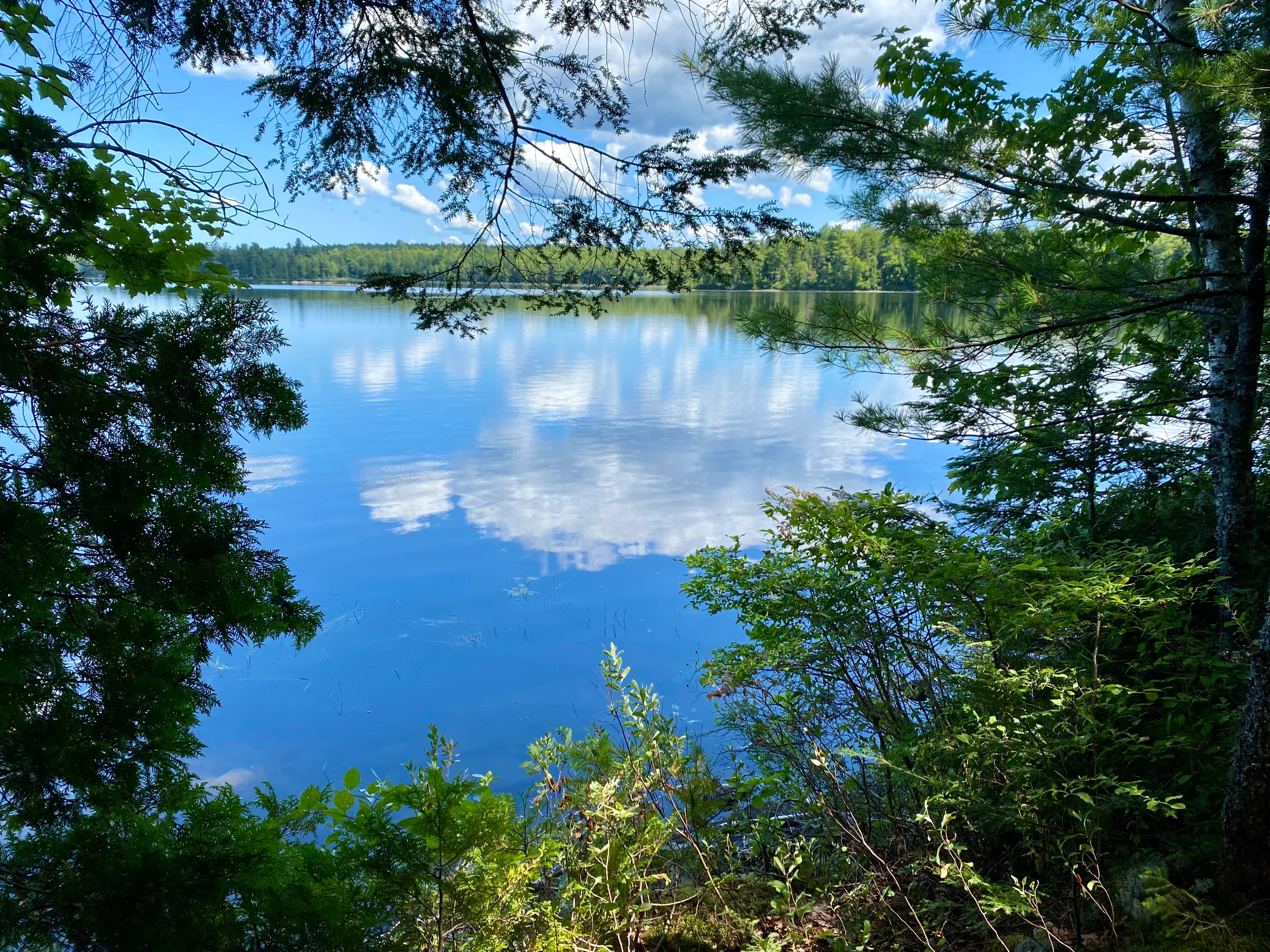
Shifting the view from a narrow focus on the pathogen and towards building the bodily environment was a kind of paradigm shift for me. When I started to think about our standard approaches to infection, I saw that many are geared solely towards killing the pathogen (e.g., widespread antibiotic use, or even in the case of herbalism, relying on potent antimicrobial herbs). Don’t get me wrong: sometimes these tools are very much needed, and I’m grateful for them. But if the terrain is weak, this approach can lead to the all-too-common outcome of immediate improvement, but once the intervention is withdrawn, relapse as the pathogen regains a foothold in the body. If done without care, it can also destroy our own microbiome—the trillions of bacteria and microorganisms that live in and on our bodies, with whom we exist in a symbiotic relationship. Especially in the case of broad spectrum antibiotics, this can also result in antibiotic resistance, which is becoming a serious worldwide health issue. (Fun fact: This is less likely to occur with plant medicine, as herbs contain so many varied antimicrobial compounds that it’s much harder for pathogens to develop resistance to all of them at once.)
An extreme form of the pathogen-focused approach leads into the idea of sterilizing one’s environment—enter antibacterial soap, wipes, and all the rest. As a culture, we went down that road on a mass scale in past decades. In a way, it’s understandable—if we have the technology to kill pathogens, and pathogens make us sick, then why not? But this is a naive and limited view. It ignores the fact that we also need bacteria to survive and thrive (our microbiome), and it doesn’t take into account our own innate (and pretty phenomenal, when you think about it) ability to defend ourselves from pathogens.
Another standard approach we often take with illness is suppressing the symptoms of infection. This is common with conventional pharmaceuticals (e.g., taking an antihistamine or fever-reducing medication), and is also sometimes done with herbal strategies too (e.g., working with an astringent to help a runny nose). Again, there’s a place for reliving symptoms to allow us to get through the day, or bring more comfort, but it’s important to remember that what we experience as symptoms are often the result of body’s attempt to fight the infection.
For example, we get a runny nose because we increase mucous production to try to flush out pathogens. We get a fever because part of the non-specific immune response is to raise body temperature, because pathogens can’t survive as well at higher temps. (Our own cells don’t do as well either, but they fare better than viruses and bacteria, so it’s a worthwhile gamble on the part of the body.) We feel fatigued because our body is using extra energy to mount all of these responses—and when we sleep, it allows our systems to focus more fully on recovery, and not have to devote energy to waking tasks. So when we suppress symptoms, we’re often actually counteracting the natural process of recovery. This doesn’t mean we need to suffer miserably, but it’s important to keep in mind the things our body is trying to do, and support them whenever possible.
Tips for a Healthy Terrain
So how can we build the terrain, and give ourselves a stronger foundation to prevent and fight infection? At the risk of sounding like a broken record, we’re back to the foundations of health. (I’m holding fast to something the herbalist Paul Bergner likes to say about the best way to practice: “Be a boring herbalist.” Meaning, of course, keep coming back to the fundamentals.) Below I’ll share just a few ideas, along with some herbal approaches, that can help bolster our bodyminds.
Nutrition. The more I learn about food and digestion, the more I see these as the base of both thriving and failing health. (And unfortunately, the more I’m also aware of how degraded our food supply has become—a whole other aspect of the idea of ‘terrain.’) What we put in our mouths can truly be our best medicine, and it can also be poison, so I’ll say a little more on this point than the others. When I think across all approaches, diets, and views about food that I’ve encountered so far (and WOW can that be a complicated and confusing space!), there are some points on which it seems most practitioners agree:
Limit refined carbohydrates and sugar. This is probably the #1 change to our diets that doesn’t generate much controversy, and may also get you the most mileage health-wise overall. Targets are always hard to generalize, but some numbers I’ve heard are between 100-200g total carbs/day, and less than 20g of that as added sugar. I’ve recently really been appreciating that refined carbs (think anything that turns to mush when you soak it in water) are converted into glucose almost immediately in your bloodstream. Too much of this over time leads to inflammation, vascular damage, and eventually insulin resistance, diabetes, and cardiovascular disease. There’s also lots of evidence that sugar suppresses your immune response—this blog offers a nice overview of some research along these lines.
Avoid processed foods. Eating real food is surprisingly difficult these days; the cheap cost, hyper-flavor, and quick convenience of processed foods have made them ubiquitous. But processed foods are usually chock full of refined carbs (see above), as well as preservatives, other flavor-enhancing compounds, and industrial seed oils that are all very likely to increase chronic inflammation. (While acute inflammation is a natural and necessary part of the immune response, chronic sustained inflammation is a burden on the immune system, making it less likely to be able to respond effectively to actual threats.) Whenever you can, eat food that is as close as possible to how it exists in nature. I don’t mean only raw foods—cooking is great—but I’m talking about whole food, like it was maybe 150-200 years ago.
Eat tons of vegetables. Once again an adage from Paul Bergner comes to mind: “Whoever eats the most vegetables wins.” Whether or not you include meat in your diet (I personally do), vegetables should ideally make up the largest portion of your plate. Fresh veggies (or frozen are good too!) provide basic nutrients, fiber to feed your gut bacteria, and a boatload of plant chemicals that are antioxidant, immune-supportive, anti-inflammatory, and more. Getting a wide variety of vegetables is key—this broadens the constituents that you’re exposed to, diversifying your microbiome and offering broader antimicrobial support. Because these molecules are often brightly colored, a handy reminder is to “eat the rainbow!”
Sleep. The more we study sleep, the more we realize how critical a process it is for our health across the board. Sleep is when most of the repair can happen in our bodies, and also when the immune system can function best. One sleep hygiene tip that’s made a big difference for me is to not eat during the 2-3 hours before bedtime. This allows the liver to get through your meal and be ready to start its daily clean-up checklist right when you go to bed, rather than having to delay because it’s busy finishing digestion. And actually ‘digestion’ can apply to more than just food—consider screen time, exercise, work, movies or shows, even social engagement—whatever might amp up your system and require additional processing. In general, allowing the body and mind to wind down a few hours before bed can be a game-changer.
Regular movement. Moving our body in space is required for proper blood and lymphatic flow, and these fluids are how all of our cells are nourished, how waste is cleared, and how the immune system does its work. It sounds so basic (and it is!), but it’s easy to get stuck at a desk or on the couch for many hours at a time every day. My current favorite movement tip is trying to walk at least 5-10 minutes after each meal. Not only does it get the fluids flowing, it reduces sugar in your bloodstream, which is helpful on so many levels! You could also try other short ‘exercise snacks’ throughout the day.
Reducing stress. Boy, this is a big one, and an area that often feels (and is) out of our control. All of the other factors of course play into this one, so making changes in other areas can already start to reduce the load we feel. Everyone will have their own most effective strategies here—meditation, exercise, being in nature, social interaction, etc. One of my own recent experiments has been a hard-core news fast. Some may disagree with this approach, but I’ve started to see more clearly how so much of the discourse on social media and in the news is designed to keep us enraged and afraid, not to mention divided. All of this invariably leads to psychological and physiological stress. I’ve found I can get the information I need to keep up with current events with minimal exposure (like less than 10 min/day), and I must say my mental health has benefitted tremendously. I’m not advocating burying your head in the sand, but I am saying it’s important to be aware of what we’re consuming in terms of information.
Herbal Support. Of course there are many plants that can directly benefit our immune system, for example the famed elderberry (see my previous post) and echinacea. I also love working with astragalus and codonopsis root, which offer slower-built but longer-term immune support. (I like to powder these roots and cook them into soups, stews, or rice.)
But plants can be our allies in each of the points above, too. Improving our nutrition can be helped with nutritive teas like nettle, dandelion leaf, alfalfa, or red clover; digestion can be facilitated with gut heal tea, bitters, and carminatives. Cooking rice or other grains in bone broth instead of water is an easy hack to boost nutrition; add mushrooms and seaweed for more direct immune support! Sleep herbs abound to help calm the mind and slow down the nervous system (e.g., passionflower, skullcap, valerian), and circulatory and lymphatic stimulants help keep cells and nutrients moving through the system (e.g., ginger, damiana, calendula). Adaptogens (e.g., tulsi, ginseng, ashwaganda, shatavari) support our body’s ability to manage stress and maintain more balance across life’s ups and downs. Importantly, each of these herbs is best matched with one’s constitution and particular needs, as every body is different.
There are many, many other ways to help build a healthy foundation; my intention here was more to give a flavor than a full picture. And I know these changes can sound basic or ho-hum, but they really can make a HUGE difference, especially over time. Working at the level of the terrain through any or all of the above avenues addresses perhaps the most basic biological need we have. It gives our bodies more energy, more resources—to heal, to fight infection, and to be able to meet whatever demands arise. When we’re not depleted or bogged down, our innate vital energy can flow.
So when it comes to staying healthy, while it would be foolish to ignore the role of fighting pathogens, I would argue that it’s equally short-sighted to ignore the importance of a healthy terrain. If our systems have what they need, we’ll be much better able to handle whatever might come our way.
Peripheral
My family had a grand time last week playing Telestrations—an award-winning party game for all ages that’s like a hybrid of Pictionary and the old-school ‘telephone game.’ Hilariously silly. Artistic ability not required!
If you need some beautiful ambient music to chill you out this season, I’ve been in love with The Chromatic Sessions by Dustin O’Halloran. It’s only 3 songs and 10 min, but definitely worth a listen. (Bath, wine, and candles optional).
If you know someone in need, Findhelp is an impressive site that can connect you with local free and low-cost resources anywhere in the US. Services include food pantries and meal programs, housing, financial assistance, transit, health care, and more. 🙏🏼