

Thyme is on your side
Bad pun; good medicine

I recently finished the Respiratory Health class at the school where I’m studying herbalism, and I’m grateful for the timing. With cold & flu season upon us, and the holidays bringing more frequent gatherings, day-to-day life is feeling fairly ‘germ-forward.’
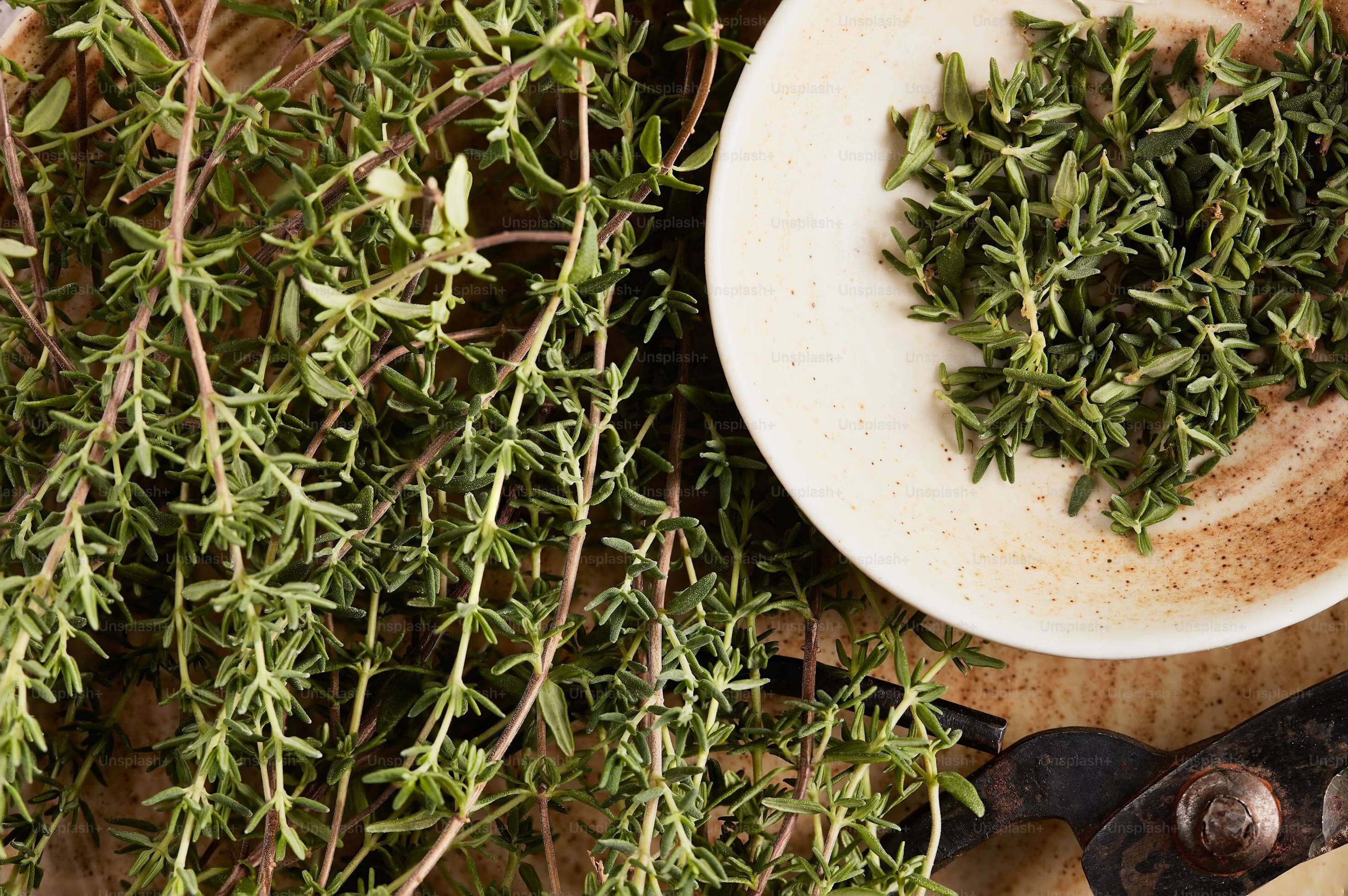
I wanted to share a favorite herbal remedy for respiratory woes, in the hopes it might serve you through this season and beyond: the thyme steam. (Somewhat similar to my plantain obsession, I’ve been pretty keen on thyme steams of late… they worked wonders for me through my last bout with COVID.) I’m not sure why, but steams tend to fly under the radar of popular alternative medicine, perhaps because they require a little more effort than popping a pill or steeping a tea. But they can be one of the most effective approaches for helping your body fight an infection anywhere along the respiratory tract—lungs, throat, mouth, nose, and sinuses (and that means even eyes and ears). Basically any of the openings in your head, and wherever those openings lead.
The effectiveness of steams brings up a number of basic premises in herbalism, the first being that we always need to think about how to ‘get the herb to the problem.’ There are many ways of taking in herbs—you could drink tea (water extraction), take a tincture (alcohol extraction), apply an oil or salve (oil extraction), consume the whole plant, inhale a steam, take a capsule, and many more. The optimal method will depend on a number of factors, including: 1) the constituents you’re interested in working with, 2) the best way of extracting them (or not) from the whole plant, and 3) the tissue or system in the body where you’d like to deliver those constituents. For example, if you’re having indigestion, tea is often ideal, as it can flood the gastrointestinal tissue that’s experiencing the problem with a fairly large volume of plant material infused into water.
In the case of a respiratory infection, we’re focused on getting herbs directly to the respiratory tract—that’s where the pathogens are hanging out and multiplying. While some herbs can do this internally (through ingestion and metabolism), a steam is considered a topical application. It’s a little odd to think about, but your lungs are actually contiguous with the outside world. Just imagine if you could shine a light into your mouth, down your trachea and through all your bronchi—the air outside of you is all the way down in there too!
So your lungs (and also your GI tract) can be considered ‘external surfaces’ of the body, because they’re in direct contact with the outside world. Thus, a steam is a topical application to the respiratory tract (and a tea is a topical application to your guts)! Topically is the most direct route of getting herbs to the problem; you’re applying the relevant plant constituents straight to the tissue that’s affected. Which is awesome!
Another cool thing to think about is the medicinal qualities of so many herbs and spices that we as humans have traditionally incorporated into our food, across time and place and culture. The aromatic mint family plants (aka the “smelly mints”) like thyme, oregano, sage, rosemary, peppermint, lavender, and basil all contain volatile compounds that aerosolize right into the air—those are what you’re smelling when you sniff a fresh plant, or a spice jar. These are common in cuisines around the world, and those volatiles are potent antimicrobials! What’s extra cool is that unlike pharmaceuticals, most antimicrobial plant compounds are ‘broad spectrum’—that is, they’re effective against many different kinds of pathogens (viruses, bacteria, fungi, etc.). Here’s a deeper dive into just one of the powerful constituents of thyme: thymol.
Why do plants contain antimicrobials and antioxidants and lots of other compounds that are helpful to humans? Because they’ve been on this planet a lot longer than we have, and face the same challenges as all life forms—dealing with pathogens and oxidation and tissue damage, etc. They’ve had hundreds of millions of years (!) to evolve effective mechanisms to deal with these basic struggles of life. At a molecular level, our chemistry isn’t actually that different from plants, and we’ve been living alongside them for ages, so a lot of plant compounds are active in our bodies too.
Maybe then it’s not surprising that we have built-in tools to detect many of these compounds. Smell, taste, and even vision can let us know about what’s in a plant, and this can be honed with training. Kind of like a sommelier learns to subtly distinguish the various compounds in wines (e.g., tannins, acids, sugars), we can learn to identify medicinal compounds in plants through our senses. We all have a natural ability to detect whether a handful of mint is fresh and bursting with aromatics. The same goes when you’re selecting the best produce to buy or harvest—those vibrant colors you’re drawn to actually are antioxidant compounds in the plant. (That's why it’s truly a good idea to ‘eat the rainbow!’)
Fun fact: the qualities of any substance that are detectable in this way are called organoleptic, which means relating to the senses. (Word of the day! 🤓) Organoleptics are a key part of training in herbalism.

So, back to thyme steams. If you’d like to bathe your respiratory tract with those antimicrobials, here’s a basic how-to:
Boil 2-4 quarts of water in a pot, and while it’s heating, grab a sheet, blanket, or large towel. Set the pot of hot water on a table or surface (with an oven mitt or towel underneath) and arrange yourself so you can get your face pretty close to the pot, where the steam is coming off.
Add several tablespoons of dried herb to the boiling water. While my school community often refers to this preparation as a ‘thyme’ steam, in reality there are many different herbs you can add into the steams. Think smelly mints—any will work! Those aromatic compounds are the medicine. Dried herbs are better than fresh for this purpose, because their constituents are more concentrated. Thyme and oregano (e.g., from your spice rack) are go-tos and really powerful. They can also be drying if you work with them exclusively over many days, and they’re somewhat sharp and hot, so if your respiratory tissues are inflamed or if you struggle with asthma, this may not be a great approach. If you want something gentler, you can try chamomile or peppermint, which are cooler and gentler, and still have antimicrobial action.
Right after you add the herbs, make a ‘tent’ with the blanket to cover your head and the pot, letting as little steam escape as possible. This is because you don’t want to lose the volatile oils that get released… you want to breathe in as much of them as possible! Drape yourself with the blanket and breathe in the steam, deep into your lungs. And the steam is more than just a vehicle to deliver the herbs—it’s also bringing moisture and warmth to your respiratory system. Respiratory pathogens prefer the slightly cooler temperature of the lungs and bronchi, so heating with steam makes it harder for pathogens to thrive, kind of like applying an external fever. Breathe in and out through your mouth and nose as deeply as possible. No need to rush. Stay in the tent for 10-15 minutes if you can. If it’s too hot or uncomfortable, take a break, or create a little vent to let some steam out.
Bring a tissue with you, because your nose will likely run! If you haven’t dripped mucous into the steam pot, when you’re done, you can let the pot steep for another 30 minutes or so, and strain it and drink the tea. Bonus medicinal compounds ingested through the gut!
Repeat the steam daily—even better, twice a day if you’re feeling symptoms coming on.
You can also do this as a preventative measure, steaming once every few days, or especially after large gatherings or when you know you’ve been exposed to some respiratory germs. You can steam with another person you’re close to (it’s a nice chance for some serious dedicated face time 😆), or if you have young kids, you can get creative and make a tent with couch pillows or under the kitchen table with a sheet… Share the love!
And if you’re on the go, or want to skip the whole steam process, a quick hack is that inhaling essential oils of these same plants can work in a pinch to deliver those volatile compounds in a similar topical way. Just make sure you don’t ingest the essential oil—only breathe it in. You can open a bottle and take a big sniff, or use an inhaler (see below). You can also add a few drops of essential oil to the steam, if you’re out of dried herbs.
Wishing you peace, joy, and respiratory health this season! 🌿
Peripheral
In the wake of Hurricane Helene, I gathered a few weeks ago with my local herbal community to make medicine to send to NC for relief efforts. One of the products we made was simple herbal inhalers—this concept was new to me and I think it’s brilliant! It’s basically an air-tight holder for a cotton wick onto which you apply essential oil… open it up anytime for an antimicrobial sniff! Here are some fancier ones, or you can buy them in bulk. Essential oil not included.
My favorite holiday tradition that I’ve ever heard of is known in Iceland as Jólabókaflóð (the phonetic pronunciation is yo-lah-bo-kah-flod), when folks give books as gifts on Christmas Eve, and then everyone sits around by the fire and drinks hot chocolate or ale, and reads all evening. Um, yes please! I’ll be implementing this tradition as much as possible this year.
Speaking of books, here’s one that I haven’t read yet, but is on my list, and might be of interest if you’re keen on plants: The Light Eaters: How the Unseen World of Plant Intelligence Offers a New Understanding of Life on Earth, by Zoë Schlanger. I think it’s critically important that we think deeply about other forms of life (and intelligence) on this planet. Ways of Being, by James Bridle, is another fantastic exploration along these lines.