

A wider aperture

I’ve had a couple opportunities lately to reflect back on my meandering journey through life, and it’s brought up a recurring theme that I thought might be worth exploring here as we look ahead to a new year.
The term ‘aperture’ is usually reserved for the world of optics and photography—the aperture of a lens refers to the opening that controls the amount of light that passes through and is propagated into the optical system. The wider, or more open, the aperture, the more light enters. Aperture settings affect things like focus and depth of field, as well as how much of the world is captured in the image.
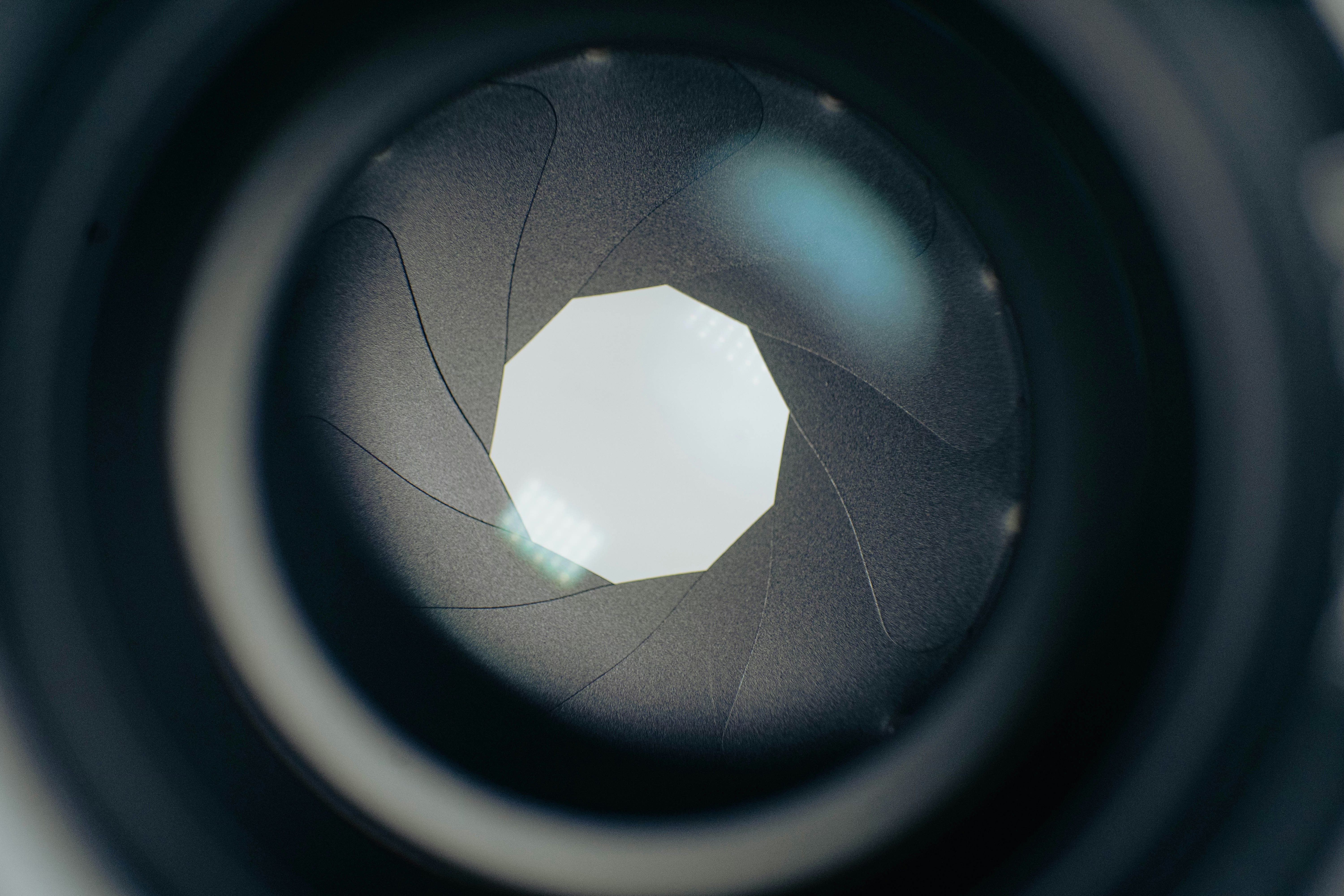
The first time I heard aperture used metaphorically was in reference to meditation, and our ability to control the scope of our attention. Contemplative practices—especially attention-based forms—often work with this mental capacity, training its flexibility and precision. In the research world, two broad categories of practice have been suggested, representing two ends of this attentional spectrum: focused attention and open monitoring.
In a focused attention style of meditation, you might try to maintain your attention on the sensations of your breath in your chest (or even more specifically, at the edge of your nostrils). You could also use an object of any of the other senses—a real or imagined visual object is also a common attentional ‘anchor.’ The aperture here is very narrow. Note that if you’ve tried this for even a few minutes, you’re undoubtedly familiar with the tendency of the mind to wander, jumping to other objects, trains of thought, emotional patterns, and so on. This is actually the point of this style of meditation: the intention to keep one’s attention focused narrowly throws into stark relief how little control we usually have over our attention. When we repeatedly watch the mind wander away, and gently and consistently bring it back to our chosen object, we’re training our attentional abilities. Perhaps more importantly, we’re also familiarizing ourselves with our own minds—the word meditation in the original Pali means ‘to become familiar with.’
In an open monitoring style of meditation, the aperture is at the other end of the spectrum. The practice involves widening your focus, trying to almost spread your awareness out like peanut butter all the way to the edges of a slice of bread. You try to let your attention encompass everything in your sensory field—visually this includes everything in your peripheral vision as well, plus of course smells, sounds, tastes, and tactile sensations. This is challenging in a very different way, but it still exposes the mind’s tendency to pick out things to focus on.
I was surprised in my first herbalism classes with Kat Maier to learn that she relies on this kind of attentional practice to help train pattern recognition. She referred to it as ‘wide angle vision’—basically the same approach I’d been exposed to in the meditation world, in this case softening the focus on the visual field and being sure to include the periphery. What does this training have to do with herbalism? As Kat explains in her book Energetic Herbalism:
As you make this shift [from narrow to wider perspective], your consciousness drops from sympathetic mode (fight or flight) and enters the parasympathetic world of sensing environs from a more holistic vantage point.
The body relaxes and awareness is heightened because the analytical mind is put aside. Patterns emerge and sounds that were inaudible can be heard as you release the mental gyrations that were drowning out the present moment. Trackers, gardeners, hunters, wildcrafters, and those gifted with a natural acumen for high awareness live in this state of being in which many levels of the world can be perceived simultaneously.
This level of perceptiveness is critical in energetic medicine, where the goal is to treat the whole person and not just superficial symptoms. The mantra is to treat what you see, but this “seeing” must include all the senses, not just the eyes. We listen to the client’s history, feel their pulse, smell their scent, and observe (with the heart as well as the eyes) their movements and spirit.
To skillfully observe patterns of disease, we first need to spend time observing patterns in Nature, to learn to grasp patterns of harmony and disharmony. Blowing winds that dry the land, flooding waters that swell rivers, excess heat that rises, and cold that depresses are all vital expressions of Nature that play out in our organs, joints, muscles, thoughts, and spirit. This is the practice of traditional folk herbalism: Through observation of Nature’s patterns, the inherent self-regulating systems of the body are acknowledged and supported. [this and other excerpts from Kat’s book here]
I love the way Kat weaves the patterns of nature into the patterns of our bodies and minds. We are nature, after all. And the ability to take in a bigger picture (literally and figuratively) is so desperately needed when addressing health issues. It provides a counter to the reductionism we see so often in Western approaches, which contributes to the tendency to focus narrowly on treating symptoms while missing the wider landscape of health or disease.
Where we look
Kat also raises the interesting link between what we focus on visually, and the balance of our sympathetic and parasympathetic nervous system. Activation of the sympathetic nervous system prepares us to deal with immediate threats (fight/flight), while parasympathetic activation supports restoration, repair, digestion, and generally calm and safe bodily states.
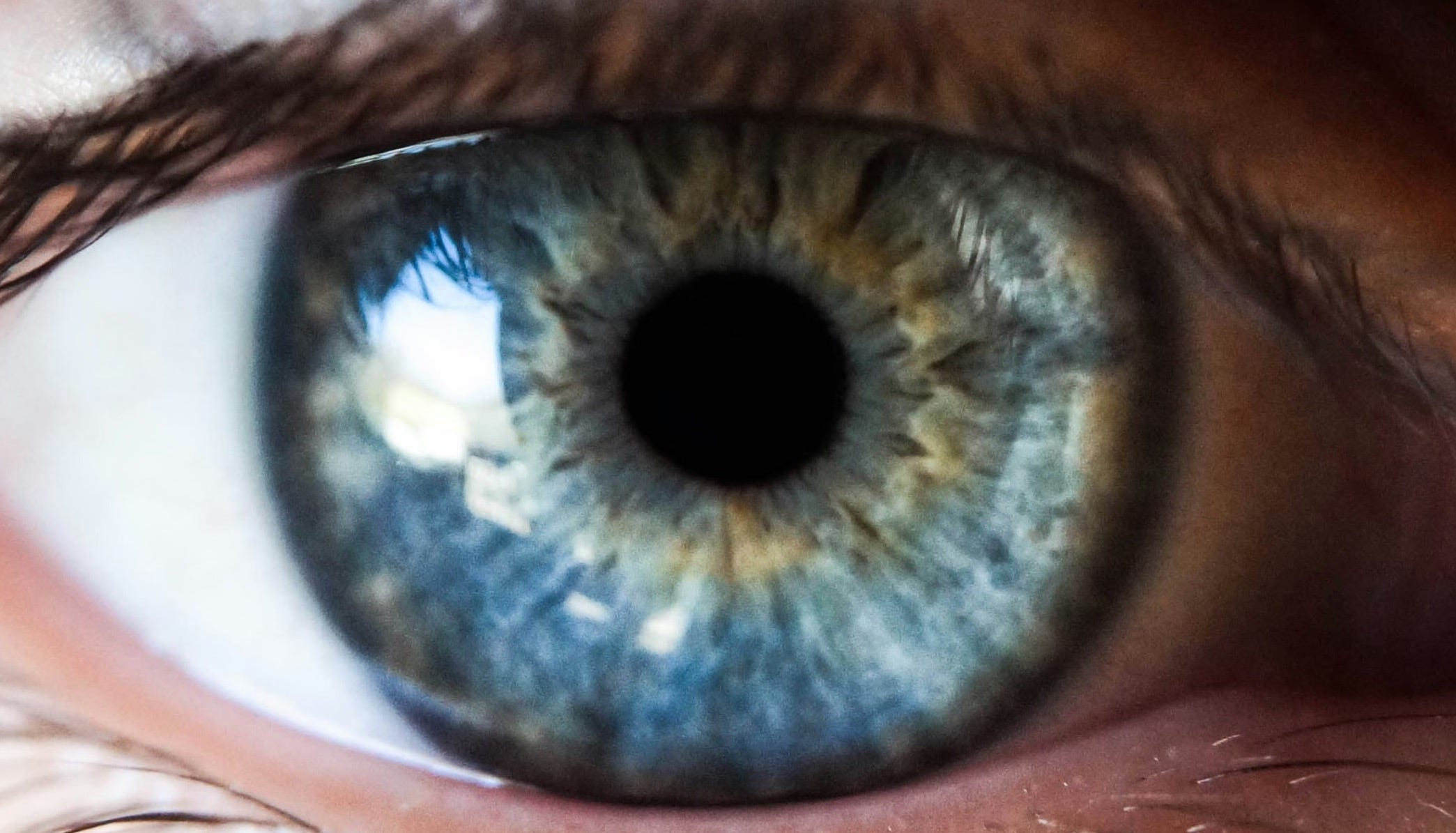
Many of us are familiar with the effect of sympathetic activation on pupil diameter—when we’re stressed or our arousal systems are active, our pupils dilate. Being wired this way is useful for dealing with immediate threats or concerns because it lets more light into the optic system. When it comes to our visual perception, this response allows us to focus more clearly on what’s right in front of us. This makes sense, as threats (at least evolutionarily speaking) are usually close by.
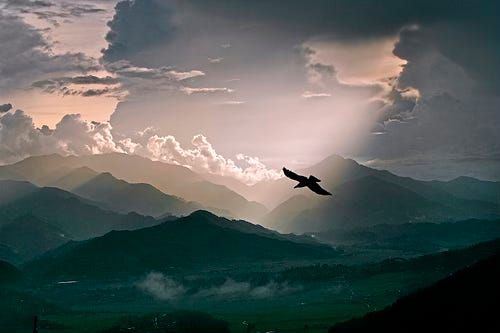
Conversely, activity in our parasympathetic nervous system is associated with broader vision, looking into the distance or attending to the periphery. Again this tracks—in our long history of human development, when we were able to scan the horizon or take in more of our surroundings, there were likely no immediate threats to deal with, so our bodies were signaling safety and calm.
All of this biology leads to some interesting hacks, because as with all things bodymind, the causality goes both ways. If we practice wide-angle vision, opening our awareness to take in more of what’s around us, it can quiet our sympathetic nervous system. This is handy if we’re struggling with chronic anxiety, or maybe just, ya know, living in the world today. It also gives pause when we consider how much of our day to day involves close-up focus (e.g., computers, phones)… digital content aside, is this near view itself prodding along our sympathetic response, feeding low-level stress? Finally, the visual-nervous connection may shed light on yet another reason why time in nature is so good for us. I’m reminded of hiking through a forest and coming upon a wide open vista, or laying on a beach and looking out to the horizon… that feeling of taking in the panorama—that’s the parasympathetic nervous system coming online.
Live & learn
Beyond just our nervous systems, how can training to widen the aperture of our perspective shift the way we see the world? I can’t help but sink into this metaphor. When I look back at how my interests and professional life have unfolded over the last couple decades, I see a consistent, if slow, opening of the aperture of my own view.
If you’ll indulge me, by way of example, a trip down memory lane…
My graduate work in neuroscience was on a hyper-narrow level of focus: I studied the expression of genes that code for specific parts of a protein that made up a specific neurotransmitter receptor, on individual cells in a small region of the human brain. Not only that, but splice variants of those genes (variable ways they get expressed)—an even more micro-level of analysis! Riveting, I know. The idea was to see whether these genes were expressed differently in the brains of folks with psychiatric disorders versus those without. And the answer after many years of sustained effort was… maybe? Kinda? Sadly, while I do see the value in understanding genetic phenomena generally, my own personal graduate work didn’t result in anything I felt was actually useful to actual humans (or anyone else).
Later I did a postdoc and studied the startle reflex in patients with schizophrenia, and subtle ways it was modulated. The idea here was that this reflex is a very basic, pre-conscious response that might give us a window into abnormalities that could be associated with the disease. So I’d expanded to working at the level of a behavioral response instead of looking inside single cells, and was also interacting with actual people. It was closer to work I found meaningful, but still quite removed. There was a large gap between the daily experiences and struggles of the folks I was interacting with and the numbers and graphs my data was yielding. I still didn’t feel like I was helping.
The next shift was learning neuroimaging—looking at blood flow (a proxy for neural activity) in the brains of people doing various tasks in the scanner. Again a “whole person” physiological response, and I studied schizophrenia patients and then pivoted to studying meditation. My own personal experience with meditation motivated this re-direct: I had started meditating during a hard time in my personal life, and was fascinated by the changes I saw in my own mind. (The first was a notable reduction in irritability… which reminds me, ahem, I probably need to start meditating more again!) I figured there must be changes also happening in my brain, and I was super curious if we could learn about what was going on there.
This was in the very beginning of meditation research being ‘a thing,’ so the field was wide open and it was an exciting time. Finally I felt like I’d landed on something that might be able to help people, and it was a practice that you could teach someone and study how it affected both their brains and their lives. I got connected with the Mind & Life Institute, and started hanging out with philosophers of mind and Buddhist scholars, and my world opened far beyond just neuroscience and the brain. Slowly I began to see that there are other ways of knowing than scientific inquiry. It wasn’t long before I left academia (after publishing research I was finally stoked about, but still a little unclear how it might help people) and took a job at Mind & Life—a big jump I’ve never regretted.
I’ve spent the last 15 years in conversation with interdisciplinary scholars and thinkers, asking questions about the mind, how it’s shaped, and how we can change it for the better. (See the Mind & Life podcast—my absolute favorite project to date—for 80+ episodes digging into these questions.) Over this time, my view of the mind expanded from a brain-centric perspective to include the rest of the body, and also our social and physical environments. Along the way, I gained a lot of experience in Buddhism and meditation, and no doubt the emphasis in these traditions on interconnectedness and the value of all life have deeply influenced my current views.
Still though, until I started down the path of herbalism and holistic medicine, my focus stayed pretty closely on the mind and the nature of our subjective experience. I’d somehow lost sight of, or still not payed much attention to, the rest of the body—the vast, vast majority of the ongoing processes that sustain life of which we’re not consciously aware. Digestion and absorption, the flow of blood and lymph, elimination of wastes, barrier integrity and immune function… it turns out these processes aren’t just background noise in service of some ‘more important’ function like consciousness. These are interwoven with consciousness to the point where it’s really more a coherent whole—you can’t separate the biology from the psychology.
And you can’t separate those from what’s happening outside the body as well—in our homes, in our communities, and in the world. Over the last 5-10 years, I’ve also been increasingly exposed to ideas that fall within the realm of sociology, history, economics, systems thinking, political science, environmental science, and more. Each of these windows has been letting more light in, helping me understand the world from different perspectives and yielding a more holistic picture.
On one hand, I suppose all this is a natural process as we age—we integrate more and more information (if we’re fortunate enough to be exposed to it) into our models of the world. A tricky part is that each new lens you add doesn’t discount the previous ones. It just makes them a bit smaller proportion of the whole kaleidoscope of reality. As you integrate more, you have to kind of balance the new with the old, like adjusting so many sliders on a big audio mixer.
On the other hand, I know that unfortunately for many, these world-expanding experiences are less accessible, so this ever-widening trajectory is not a given. I’m humbled and deeply grateful that I’ve had the incredible privilege to keep learning throughout my life. I think this is part of why I’m passionate about sharing knowledge, too. They say there are only two things that grow when shared: knowledge and love. 💕
It’s funny how at each moment in life, you’re the most experienced you’ve ever been, and have the most information you’ve ever had, but there’s always so much more to learn! I know I’m still only seeing the world through a small window, all things considered. The aperture could be a lot bigger yet. But perhaps opening it all at once could ‘blow out’ the ability to receive it, like an overexposed image when too much light gets in. Nature is all about modulation and staying in the goldilocks zone—not too much info, not too little. So, step by step.
Change your lens
In today’s world it’s very easy to get pigeonholed into a narrow view, an echo-chamber with a tiny aperture that doesn’t allow enough light in to even see that there’s more to see. It takes effort to counteract the algorithms (and let’s be honest, often our social circles too) that feed us only what we want to hear, reinforcing the patterns we already hold. How can we push back on these trends, and see beyond the horizons of our current vantage points?
Here are a few thoughts:
Practice wide-angle vision. Spend 10 minutes looking into the distance and also noticing what’s in your peripheral vision. A new perspective is rarely right in front of you; it’s usually at the edges of your current worldview.
🌿 Plant assistance: calamus (Acorus calamus) and wood betony (Stachys officials/Stachys betonica) can be good friends in this effort, grounding you in your body (out of your ‘head’), clearing your mind, and nudging up the parasympathetic system.
Talk to your neighbors, or to people whose paths you cross regularly that you don’t normally speak to. Find out what’s important in their daily lives. What do they care about, worry about, enjoy?
Spend more time in nature. Try sitting under a tree for 20 minutes and see how many things you can notice in the ecosystem around you. Try it again the next day. And the next.
Travel outside your normal loops. This could be across your building or your town, to an area you don't frequent, or across the country or the world.
Take an intentional break from social media. N’uff said.
Get to know a plant—either in your surroundings or in your body (e.g., medicinally). How? It’s just like getting to know another person. Spend time repeatedly with them in lots of different situations. Pay attention to them. Find out about their background. What do they like, and what energies do they embody? How does being around them (or taking them in) make you feel?
Read a book (or listen to one) with an expansive view. Here are just a few that have changed me, for which I’m so grateful:
The Overstory by Richard Powers
Ways of Being by James Bridle
The Light Eaters by Zoë Schlanger (current fav - see more below!)
Braiding Sweetgrass by Robin Wall Kimmerer
As the year comes to a close, I’m thinking about what seeds I’d like to plant for the coming trip around the sun. One thing I’d like to take root is finding even more ways to widen the aperture of my own awareness. I’d love to hear your ideas, and favorite ways you’ve found to expand your view!
Wishing everyone lots of joy and learning in 2026, and beyond! May we all see more and more of this interconnected web we call home. 🙏🏼
Peripheral
I haven’t even finished The Light Eaters by Zoë Schlanger yet, but it’s already among my favorite reads this year. Schlanger so skillfully explores what we’re learning about how plants not only live, but communicate and learn: complex chemical messaging between plants that depends on their relationship to each other, massive connectivity through mycelial (fungal) networks and plant roots underground, how plants sense and respond to their environments, and do so with individual tendencies that sound a lot like personalities. 🤯 LOVE!!
If you’d like to avoid the AI slop on the internet about herbalism, check out Herbal Reality—an impressive resource put together by actual herbalists, and a nice place to start when looking up a given herb or topic.
In the spirit of exploring life from different perspectives, I loved the award-winning and stunningly animated movie Flow, which is a story seen through the eyes of animals. There’s no dialogue, but you quickly realize none is needed. I thought this was just brilliant. Hulu | HBO | Prime
I read The Light Eaters this past fall and it has become one of my favorites for sure!
Brilliant, Wendy! Your excellent writing skills, coupled with your insatiable curiosity, make for an exciting read.